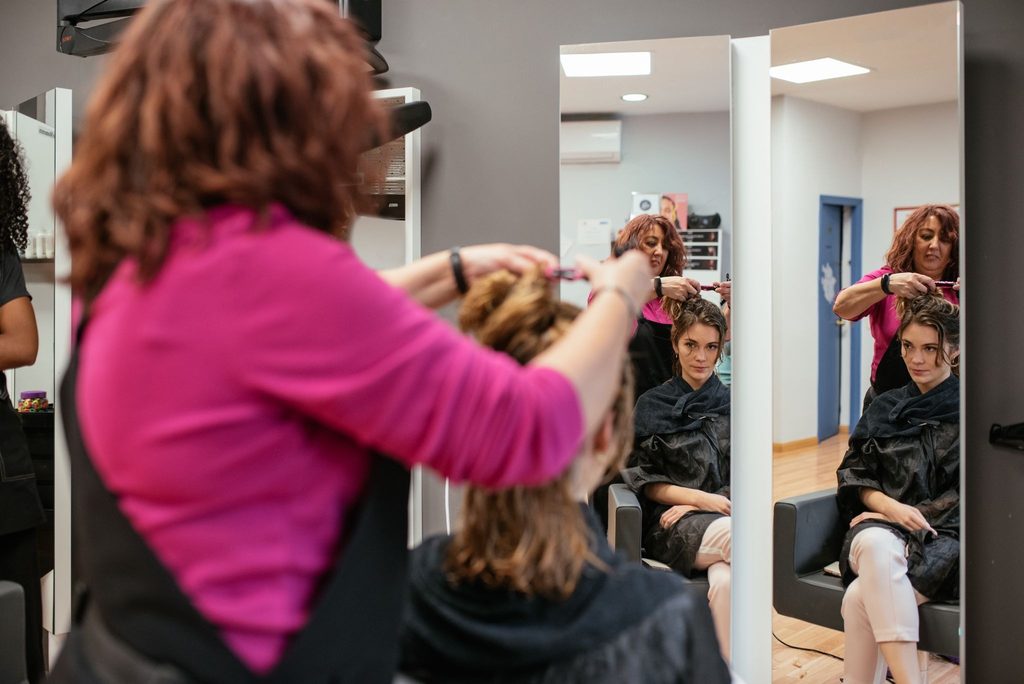
Perming has a reputation shaped by harsher formulations and by results that damaged hair rather than shaped it, which is why clients with any existing damage generally rule it out without asking. Gentler conditioning-based formulations have changed that calculation for some hair types and not for all, and whether yours is a candidate depends on an assessment rather than on a category. Four profiles describe hair that tends to respond well to a keratin oil perm in Singapore, with the caveat that any of them still requires a stylist to examine your hair before anything proceeds.
1. Hair That Is Naturally Straight, Fine, and Lacking Volume
Fine straight hair that falls flat regardless of styling is among the more straightforward candidates, provided it has not been heavily processed.
The goal here is usually movement and body rather than defined curl, and a softer result suits fine hair better than a tight one, which can look disproportionate and is harder to maintain. Fine hair also processes faster, which means timing matters considerably and is a reason to have this done somewhere attentive rather than somewhere cheap.
Ask what result the stylist thinks is achievable on your texture specifically, since fine hair holds curl differently from medium or coarse.
2. Hair With Some Natural Wave That Is Inconsistent
Many people have hair that waves in places and not others, producing a result that looks undone rather than textured.
This profile frequently responds well, since the aim is evening out and defining what is already there rather than creating curl from nothing. The result tends to look natural because it works with the existing pattern.
Bring photographs of your hair on both its better and worse days, since that gives a stylist a clearer picture than a single reference image of someone else’s hair.
3. Previously Coloured Hair in Good Condition
Coloured hair is not automatically unsuitable, and condition matters more than colour history alone.
Hair that has been tinted or lightly highlighted and remains strong, elastic, and in reasonable condition can frequently take a gentler formulation, though it may process differently and the stylist will account for that. A professional hair salon will perform a strand test before committing to a full application on previously coloured hair, and a salon that proceeds without one on chemically treated hair is taking a risk with something that belongs to you rather than to them.
Heavily bleached hair is a different matter and frequently unsuitable regardless of how it looks.
4. Coarse or Thick Hair That Is Difficult to Style
Thick, coarse hair that resists styling and takes considerable time to manage daily sometimes benefits, since a permanent texture reduces the daily effort substantially.
This hair type generally tolerates processing better than fine hair, though it may need longer and the result can be stronger than expected. Discussing the degree of curl you want explicitly, and seeing examples of the stylist’s work on similar hair, is worth doing beforehand.
Having the Hair Assessed Rather Than Deciding by Category
None of these profiles substitutes for an actual assessment. A stylist should examine your hair, ask about every chemical service it has had including anything done at home, test its elasticity and porosity, and say plainly whether they would proceed.
Where the answer is that your hair is not currently in a condition to take it, a good stylist will say so and may suggest a period of conditioning treatments before reassessing. That answer is worth more than one that proceeds and produces breakage. Ask also what the aftercare involves and how long the result lasts, since both affect whether the treatment suits your routine.
Contact Stile Hair Studio to have your hair assessed and discuss whether a perm would suit its current condition.